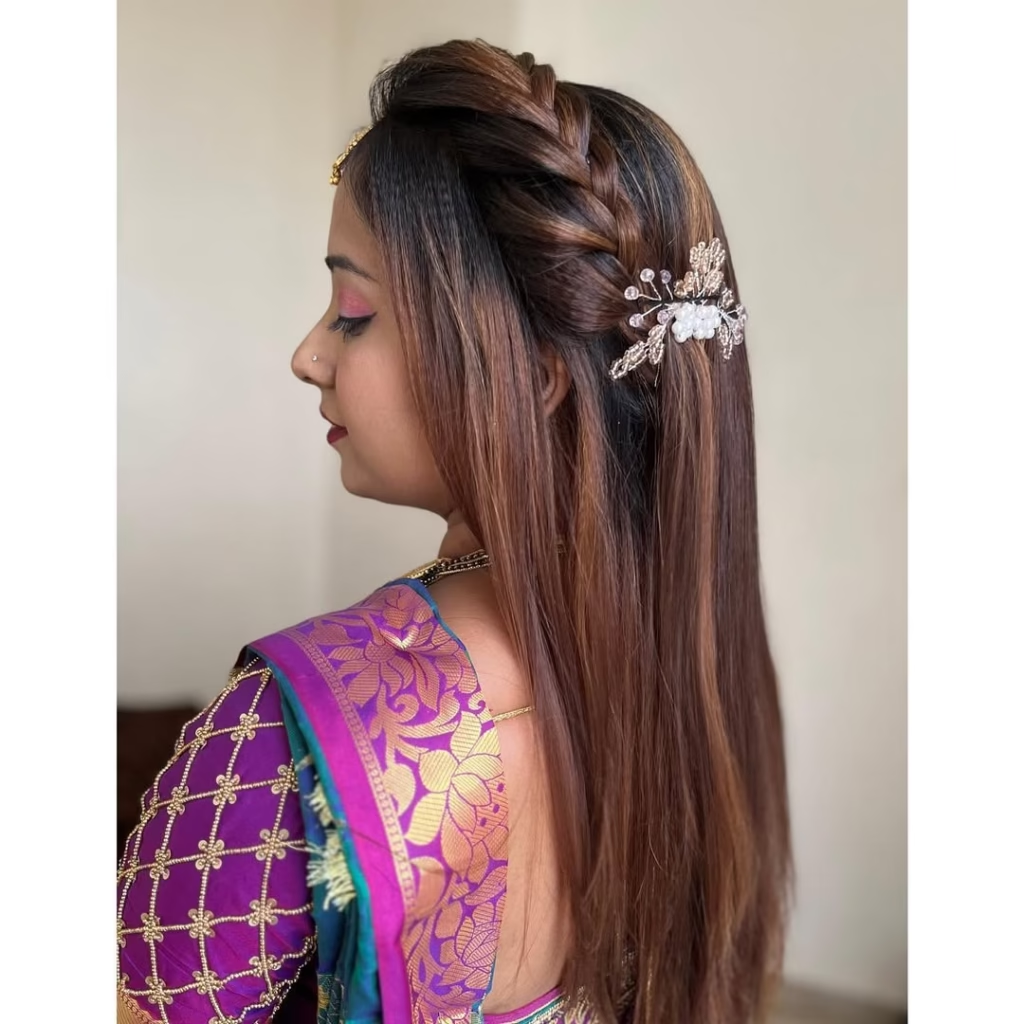
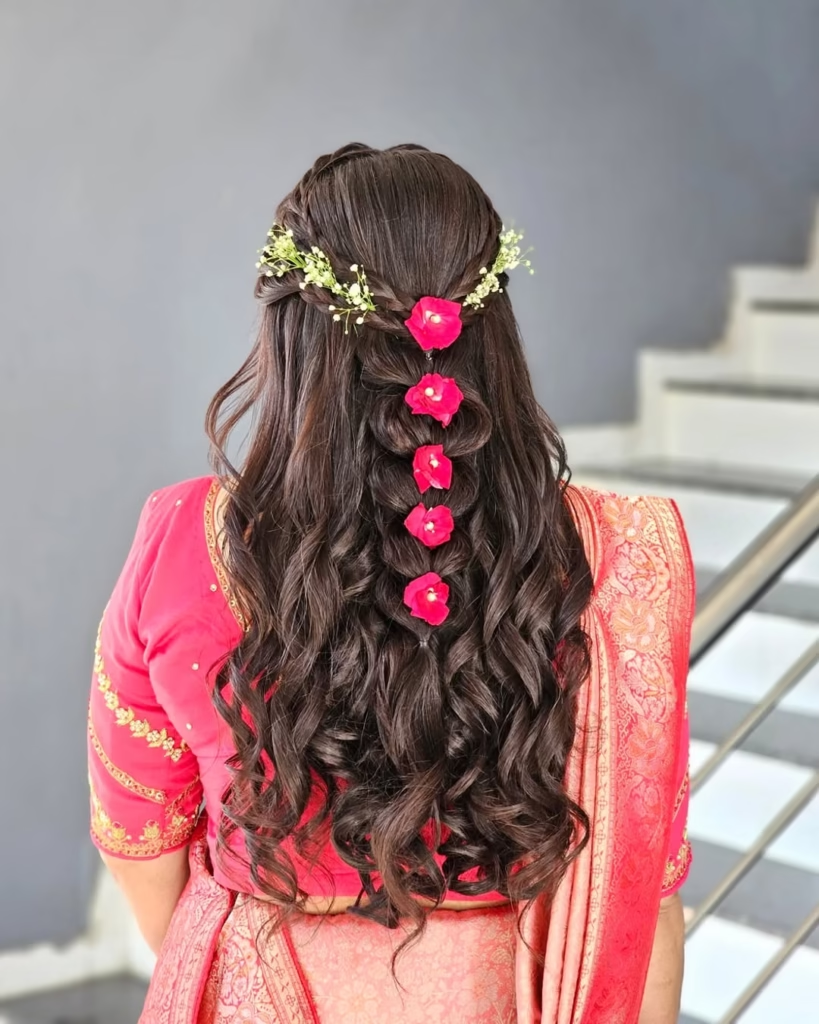
If your feed has been full of bouncy, 90s-style blowouts and feathery face framing layers lately, you’re not imagining it. The viral layered haircut with bangs a voluminous, medium length cut with soft, wispy curtain bangs is one of the most-requested salon transformations of the season.
Its appeal is simple: it balances easy movement with real structure. Instead of weighing hair down, strategic layers lift the crown, frame the cheekbones and turn flat, medium length hair into something full and bouncy.
Below, you’ll find why the cut works, how a stylist builds it step by step, exactly what to say in the chair, and how to keep it looking fresh at home in five minutes.
Why Everyone Wants This Layered Haircut with Bangs
- Built-in cheekbone definition: The angled side pieces are cut to skim the cheekbones and jawline, softly contouring the face.
- Volume without losing length: Shorter layers sit around the crown and front while the baseline stays intact, so hair looks noticeably thicker without giving up its shoulder to chest length.
- Bangs you can wear two ways: The wispy fringe blends straight into the side layers, so you can wear it full across the forehead or part it down the middle as classic curtain bangs.
Who This Cut Suits Best
It’s most flattering on medium length hair with fine to medium density that tends to fall flat the layers add the lift it’s missing. Straight and wavy textures show the feathered shape best. If your hair is very thick, ask your stylist to remove extra weight through the interior so the layers don’t puff out. If it’s very curly, look for a stylist who cuts curls dry, as the bangs will spring up shorter than they look when wet.
Watch the Transformation
How the Viral Layered Cut Is Done, Step by Step
Whether you’re a stylist recreating the look or a client curious about what happens in the chair, here’s how the cut and blowout come together.
Tools Used in the Salon
- Professional hairdressing shears
- Fine-tooth precision cutting comb
- Sectioning clips and a styling cape
- Professional blow dryer and a large round barrel brush
1. Prep and Section the Hair
Every good layered cut starts with clean, damp hair combed completely smooth so the tension is even. The hair is then combed back and sectioned at the top to separate the front hairline from the bulk of the length behind it.
2. Map and Cut the Fringe
A small triangular section is pulled forward at the center of the forehead. Using the bridge of the nose and the eyebrows as guides, the stylist cuts the center fringe with soft, wispy ends so it falls just around the eyes. Tip: bangs are usually cut a little longer than the goal, since they shrink as they dry.
3. Slide-Cut the Face-Framing Layers
This step creates the cut’s signature shape. Taking the sections right beside the bangs, the stylist holds the hair at a downward diagonal and glides the open shears down the strand from cheekbone to jawline. That connects the brow-grazing fringe seamlessly into the longer side pieces.
4. Elevate and Texturize the Crown
With the front frame set, the stylist moves to the crown. Sections are lifted straight up at 90 degrees and point cut at the ends to remove weight from the top of the head. When the hair falls back down, these hidden layers create natural bounce and lift at the roots.
5. Finish with a Bouncy Blowout
A layered cut really comes alive during the blowout. Using a large round brush:
- The bangs are rolled forward and under for a soft, airy curve over the forehead.
- The face frame is brushed back and away from the face to create feathered “wings” around the cheeks.
- The ends are curled inward toward the neck and shoulders for a plush, rounded, 90s-inspired finish.
How to Ask Your Stylist for This Exact Haircut
Walking into a salon without the right words can feel intimidating. To leave with this exact look, you can say:
“I’d love a medium length, heavily layered cut with lots of movement and bounce. In front, I want a soft, wispy fringe that sits just below my eyebrows and blends into feathered, cheekbone length curtain layers. Please add shorter layers through the crown for volume, so the ends flip inward when it’s blown out.”
Pro tip: Save this page and show the video to your stylist before they start cutting. A visual reference is the most reliable way to get the result you’re picturing.
How to Maintain the Look at Home in 5 Minutes
No time for a full 30 minute round brush blowout every morning? These three habits keep the layers looking fresh:
- Use Velcro rollers. After drying, place one large roller in the bangs and one on each side of the face frame. Leave them in for about 10 minutes while you do your makeup, then remove and brush through.
- Apply volumizing mousse. Work a golf ball sized amount of lightweight mousse into damp roots before blow drying to hold that salon lift all day.
- Finish with a drop of oil. Rub a single drop of lightweight hair oil between your palms and smooth it over the ends to keep the layers glossy and piecey.
Plan on a trim every 6 to 8 weeks to keep the layers’ shape, and a quick bang trim every 3 to 4 weeks so the fringe doesn’t fall into your eyes.
Frequently Asked Questions
Is this the same as the butterfly cut?
They’re close relatives. The butterfly cut also uses short face-framing layers over longer lengths, but it usually skips a true fringe. This version adds wispy bangs that blend into the face frame, which gives a softer, more 90s-inspired look.
Does a layered haircut with bangs work on thin hair?
Yes it’s one of the best options for fine hair, because the crown layers create lift and the face frame adds visible fullness around the face. Ask your stylist to keep the bottom line fairly solid so the ends don’t look wispy.
Can I grow the bangs out later?
Easily. Because the fringe is cut to blend into the side layers, it grows out naturally into curtain bangs and then face-framing pieces, with no awkward stage.
Would You Try It?
Are you team curtain bangs or team full fringe? Tell us in the comments and pin this post so it’s ready to show your stylist at your next appointment.